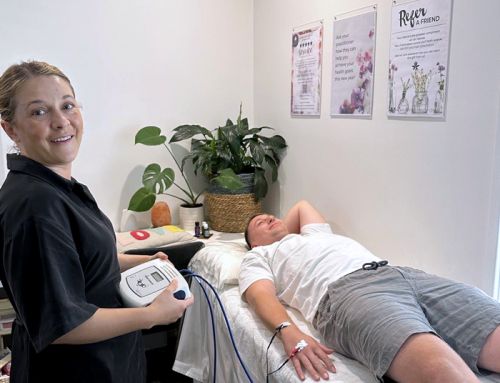

Find Your Blueprint: What Testing at Mullen Health Actually Tells You
Find Your Blueprint: What Testing at Mullen Health Actually Tells You
You get sick. You go to the doctor. You treat the problem. That’s how most of us are taught to think about health.
Here’s a better question: what if you saw the problem before it became one?
That’s the whole idea behind your blueprint. Not a metaphor. Not a marketing word. Your genes, your biology, your actual chemistry — mapped, so you know what you’re working with before it shows up as a symptom.
At Mullen Health, we find that blueprint through a range of testing — including specific genetic testing. Here’s what that actually means.
Your DNA Isn’t a Verdict. It’s Information.
Genetic testing doesn’t tell you what’s going to happen to you. It tells you what’s already been happening, and why.
Two people eat the same food. Same house, same meals, same everything. One is fine. One isn’t. Everyone calls that bad luck. It isn’t. It’s chemistry.
Some people convert nutrients efficiently. Some don’t. Some clear things out of their system in hours. Some take days. Same intake, completely different outcome — and if you’re on the wrong side of that, you can do everything right and still run on empty for twenty years, with nothing on a standard blood test looking dramatic enough to explain why.
That’s what genetic testing is for. Not fear. Not fate. Information you can actually use.
What It Actually Looks At
Genetic testing skips the guesswork. Instead of trial and error — try this diet, try that supplement, see what sticks — you get a direct read on things like:
- Coeliac disease risk — genetic predisposition markers that help clarify unexplained gut symptoms
- Lactose intolerance — whether your genes support ongoing lactase production
- Your individual B12 needs — how efficiently you actually use B12, not just how much is circulating
- Carbohydrate metabolism and diabetes risk — how your genes influence insulin function and blood sugar control
- Cardiovascular and cholesterol metabolism — how your body processes fats, and your genetic response to dietary change
- Dementia risk — genetic factors linked to long-term cognitive health
- Detoxification — how well your body clears hormones, medications, and everyday toxins
- Weight management — genetic factors behind appetite, satiety, and how your body responds to exercise
- Everyday sensitivities — caffeine metabolism and other practical, everyday genetic factors
And this goes well beyond the genes you may have already heard of, like MTHFR and methylation — genetic testing at Mullen Health looks much further afield, across the health areas above and more.
None of this is about waiting for something to go wrong. It’s about knowing where to look before it does.
This is the pattern that shows up in clinic, over and over: two sisters, same house, same meals, same everything growing up — and completely different outcomes, for reasons that were never bad luck. That’s the real value of running genetics. Not a prediction of what’s going to happen to you — a look at what’s already been happening, and why the advice that worked for everyone else didn’t work for you. Some of what shows up changes nothing. But the parts that do usually explain the last decade of your life.
Rejuvenation Isn’t a Buzzword. It’s Biology.
Forget the marketing version of “rejuvenation.” This isn’t about a routine you saw online. It’s about your body doing what it’s actually built to do — and that’s different for everyone.
A rejuvenation plan that works for one person can do nothing for another, because the underlying biology isn’t the same. Pair it with genetic testing and the guesswork disappears. You know how you metabolise nutrients, how you handle inflammation, how your cells tend to age — and the plan gets built around that, not around what worked for someone else.
Meet Krystle

Krystle has joined Mullen Health as Naturopath, Nutritionist, and Functional Medicine Practitioner.
Eighteen years in clinical practice. Much of it spent with people other practitioners had run out of answers for.
She works with fatigue, burnout, and complex presentations that don’t resolve on a standard protocol: the woman whose bloods come back “normal,” whose HRT helped for six weeks, whose exhaustion has been explained away as stress, motherhood, or age.
Her approach is nervous-system-first and investigation-led: functional pathology, genetic analysis, and a detailed reconstruction of how a person actually arrived here. Fatigue is a symptom, not a diagnosis. The work is finding what’s driving it.
She knows the terrain from both sides. Krystle lived with chronic fatigue syndrome, endometriosis and IBS through years of being told her results were unremarkable while her world got smaller. That experience shaped how she practises: thorough, specific, and unwilling to accept “within range” as an answer.
She is now moving through perimenopause herself, and holds a clear view of what this decade is. Perimenopause is not a phase to endure quietly. It is a tipping point; what happens here shapes cardiovascular, metabolic, bone and cognitive health for the next twenty years and beyond. This is not the time to cross your fingers and hope.
Krystle holds a Bachelor of Health Science, an Advanced Diploma of Naturopathy, and a Postgraduate Diploma of Yoga Therapy. She has lectured and mentored the next generation of practitioners, and values the science behind naturopathic medicine.
There’s a window in a woman’s forties that matters more than most people realise — more, in some ways, than her sixties. About a year before her final period, bone loss accelerates sharply: roughly two and a half per cent of spinal bone density lost every year for the next three years, adding up to close to ten per cent of her skeleton across the transition and the years just after. The final period itself is only confirmed after twelve months with nothing — which means the fastest bone loss of a woman’s life starts about a year before she has any way of knowing it’s begun, and by the time it can be dated, most of it is already gone.
That’s why the forties carry more weight than the sixties. In the sixties, care is about managing what’s left. In the forties, it’s about deciding how much there is to work with in the first place — and the same is true for muscle mass, cardiovascular risk, and metabolic health. This decade sets the number; everything after is maintenance. There’s no symptom to wait for. Bone loss doesn’t announce itself — the first symptom is often a fracture.
Bone density. Muscle mass. Metabolic health. None of it declines the same way for everyone, and none of it announces itself before it’s already underway. Knowing your genetic tendencies means you and Krystle are watching the right things, at the right time — instead of waiting for a fracture to tell you what already happened.
Prevention and Treatment Aren’t Separate Conversations
Genetic testing doesn’t make you choose between prevention and treatment. It does both.
On the prevention side, your results flag what’s worth watching before it shows up on a standard checkup. On the treatment side, they sharpen the plan — nutrition, supplementation, lifestyle changes, or working alongside other care you’re already receiving.
This isn’t about replacing your relationship with your healthcare providers. It’s about giving everyone in the room better information.
How This Actually Works at Mullen Health
Genetic testing isn’t a report you get handed and file away. It’s one layer inside a structured system we call the Mullen Method, built around four pillars: Gut Function, Nutrient Restoration, Stress & Nervous System, and Inflammation Control.
Here’s the flow:
- Initial consultation — full health history, symptom mapping, and an introduction to the Mullen Method so you know where testing fits before you commit to it.
- Functional testing — a range of tests, chosen for your case. That might include specific genetic testing alongside microbiome, hormone, or other functional pathology, all pointed at the same goal: finding your blueprint.
- Results consultation — your findings, explained plainly. Symptoms linked to their actual drivers. A real plan, not a guess.
- A structured plan — genetic insights don’t sit off to the side. They sharpen the nutrition, supplement, and lifestyle strategy already being built around the four pillars.
- Ongoing review — reassessed every four to six weeks. Your plan moves as you do. It doesn’t sit still.
The genetic layer gets introduced when it earns its place — complex cases, plateaued progress, or when you’re after long-term optimisation instead of a quick fix.
One more thing: this isn’t something we hand to patients and skip ourselves. Every member of the Mullen Health team, Krystle included, has done this testing. We’re not asking you to do anything we haven’t already done.
Is This For You?
If health advice that worked for everyone else hasn’t worked for you, this is where you find out why. Not fear. Not fate. Clarity.
Once you know your blueprint, you and your care team build a plan that actually fits — not one borrowed from someone else’s biology.
Want to know what your blueprint says? Reach out to Mullen Health to learn more about our range of testing options — including genetic testing — and book in with Krystle, now here at Mullen Health.
Want the detail on the test itself? Read about SmartDNA Genomic Wellness Testing at Mullen Health. Not sure where to start? Book a FREE 15 Minute Consultation.
This article is for general educational purposes and is not a substitute for individualised medical advice. Talk with your Mullen Health provider about which genetic testing and treatment options are right for your specific health history and goals.