
Perimenopause & Menopause Support
Perimenopause and menopause affect every woman, yet many women are never told what to expect.
The changes often begin earlier than most people think, sometimes in the late 30s or early 40s. And they are not limited to hot flushes and irregular periods.
Many women notice symptoms that seem unrelated: broken sleep, a racing heart, sore joints, dry eyes, or a sudden sensitivity to foods and alcohol. These symptoms are often looked at one at a time, without anyone considering the bigger picture.
At Mullen Health, our naturopaths look at the whole picture. We can help you understand what may be happening, rule out other causes, and build a plan that supports you through this stage of life.
What Is Perimenopause?
The Short Answer
Perimenopause is the transition leading up to menopause. During this time, hormone levels, particularly progesterone and oestrogen (estrogen), begin to fluctuate. It often starts in the 40s, sometimes earlier, and may last several years.
Menopause is reached when you have not had a period for 12 months. The average age is around 51. Postmenopause is the stage after that.
Progesterone is usually the first hormone to change. Oestrogen then tends to rise and fall unpredictably.
Oestrogen influences far more than the reproductive system. It also affects the nervous system, joints, eyes, skin, sleep and heart rhythm. This is why perimenopause symptoms can appear in many parts of the body.
Common Signs of Perimenopause
- Changes to your cycle: shorter, longer, heavier or less predictable periods
- Hot flushes and night sweats
- Disrupted sleep
- Mood changes, including anxiety and irritability
- Fatigue and brain fog
- Vaginal dryness and changes in libido
Symptoms That Are Often Overlooked
Some of the most common perimenopause symptoms are the ones women rarely connect with hormones.
If any of these sound familiar, it may be worth asking whether hormonal change is part of the picture.
Heart palpitations
Why it may happen: Heart rhythm is regulated by the autonomic nervous system, which is influenced by oestrogen. Fluctuating levels may trigger palpitations, often at night.
What we also consider: Cardiovascular causes, thyroid function and iron levels. Palpitations should always be checked by your GP.
Ringing ears, dry gritty eyes, dry mouth or a metallic taste
Why it may happen: Tissues in the ears, eyes and mouth have oestrogen receptors, so they may be affected as hormone levels change.
What we also consider: Ear and eye conditions, medication side effects, and B12, iron and zinc status.
Joint stiffness and frozen shoulder
Why it may happen: Oestrogen influences collagen, a key structure in joints. Changes may contribute to stiffness and pain in the shoulders, hips and hands, often with no obvious injury.
What we also consider: Joint injury, arthritis, blood sugar regulation and insulin resistance.
Waking at the same time each night
Why it may happen: Progesterone has a calming effect on the brain. As levels fall, some women find they wake in the early hours, often between 2am and 3am.
What we also consider: Alcohol intake, thyroid function, iodine status and sleep apnoea.
New food and alcohol sensitivities
Why it may happen: Oestrogen can influence the release of histamine. Higher histamine levels may contribute to a blocked nose, itching or flushing after foods or wine that were previously fine.
What we also consider: A true food allergy, and other causes of histamine reactions.
Heavy periods and clotting
Why it may happen: When progesterone falls, oestrogen may become less balanced, leading to a thicker uterine lining and heavier bleeding. This can start in the late 30s or 40s.
What we also consider: Fibroids, polyps, thyroid conditions, bleeding disorders and iron deficiency.
Sudden waves of anxiety or dread
Why it may happen: Hormone fluctuations can affect brain chemistry, including noradrenaline. Some women describe sudden waves of dread that pass within a minute or two.
What we also consider: Anxiety disorders, blood sugar regulation and thyroid function.
Importantly, none of these symptoms prove that you are in perimenopause. Many have other causes.
The aim is to consider hormonal change as one possible factor, and to make sure it is properly assessed.
Why Perimenopause Is So Often Missed
Symptoms are usually raised with different practitioners at different times.
Dry eyes may be mentioned to an optometrist. Ringing ears to a GP. Poor sleep to a pharmacist. Palpitations are sometimes put down to stress before hormones are considered.
Each symptom is treated separately, and the common thread can be missed. Looking at the whole picture is where we can often help.
When Does Perimenopause Start?
Many women notice changes from around age 40, and for some it starts earlier.
Heavier periods and disrupted sleep are often among the first signs. You do not need to wait for hot flushes before seeking support.
What We Rule Out First
Perimenopause is one possible explanation for many symptoms, but it should never be the only one considered.
We can help you review factors such as:
- Thyroid function, which commonly changes during perimenopause and after pregnancy
- Iron, B12 and zinc, which are often missed and may contribute to fatigue, palpitations and burning mouth
- Iodine, a common deficiency in Australia and an important mineral for thyroid function
- Blood sugar regulation and insulin resistance
- Sleep apnoea, which is common in this age group and can cause early waking
- Cardiovascular risk, especially if you have palpitations
We recommend speaking with your GP about the appropriate tests for you. We can then work alongside your GP.
What May Help
Every woman experiences this stage differently, so what helps will vary.
There are some general habits that many women find useful. Your practitioner can tailor them to you.
- Track your cycle and symptoms. Patterns in energy, mood and sleep are easier to see on paper. Our free Symptom Tracker is a good place to start
- Protect your sleep. A regular bedtime, less screen time at night, and limiting alcohol and late caffeine may help. Even one glass of wine can disturb sleep for some women
- Support your blood sugar. Regular meals with protein, fibre and healthy fats may help with energy, mood and weight
- Keep moving. Regular movement and strength training may support mood, metabolism and bone health
- Look after your nervous system. Deep breathing, meditation and time outdoors can help you manage stress
- Talk to someone. If your mood is low or you are struggling to cope, speak with your GP or a practitioner. You do not have to manage this alone
The goal is not to do everything. The goal is to find what works for you.
Track Your Symptoms for Free
Perimenopause symptoms can come and go, and they are easy to forget by the time you see a practitioner.
Our free Perimenopause Symptom Tracker puts the whole picture on one page. Over a month or two, it may help you notice patterns in your cycle, sleep, mood and energy, and it gives you and your practitioner real information to work with.
It includes:
- Daily tracking for your cycle, bleeding, sleep, body symptoms, mood and daily rhythms
- A simple way to record heavy bleeding
- A monthly summary, with space for your questions
- A guide to when to see your GP promptly
The tracker records symptoms only. It does not diagnose.
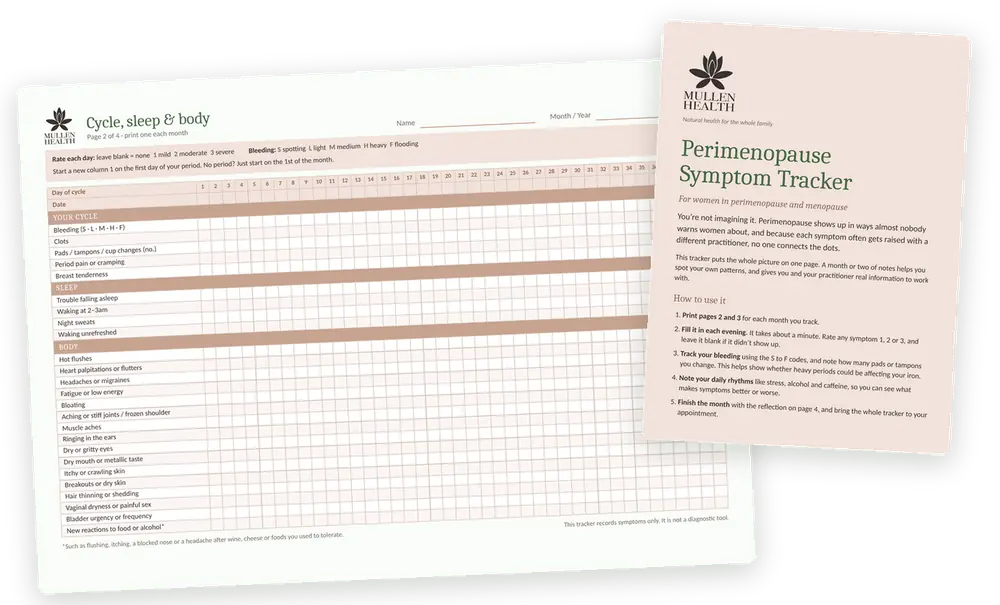
Get Your Free Perimenopause Symptom Tracker
Enter your email and you will go straight to your download.
Why This Stage of Life Matters
How you move through perimenopause may influence your long-term health.
Hormonal changes can affect cardiovascular health, bone density, brain health, metabolism and weight. Supporting your body well during this stage can help lay the foundation for the years that follow.
How Naturopathic Care Can Help
Every woman experiences this stage differently.
Your practitioner takes time to understand your symptoms, health history, diet and lifestyle before recommending anything. Support may include:
- A detailed review of your symptoms across every body system
- Assessment of nutrient status and relevant testing
- Nutrition and lifestyle strategies, including blood sugar, sleep and stress support
- Herbal and nutritional medicine where appropriate
- SmartDNA genetic testing, which can add another layer of information about areas such as weight and metabolic health, cholesterol, nutrient needs, stress and sleep. How genetic testing can help in perimenopause →
- Working alongside your GP
The goal is not to chase individual symptoms. The goal is to understand what may be driving them.
See how we support women in clinic: Perimenopause & Menopause Naturopath in Newcastle →
Meet Our Practitioners
Our team of naturopaths and nutritionists has experience supporting women through every stage of life, including perimenopause and menopause.
Perimenopause and Menopause FAQs
What Are the First Signs of Perimenopause?
Changes to your cycle, such as heavier or less predictable bleeding, and disrupted sleep often appear before hot flushes. Less obvious signs include heart palpitations, dry eyes, ringing ears and joint stiffness.
What Age Does Perimenopause Start?
Many women notice changes from around 40, and for some it begins in the late 30s. Hormone changes can start years before periods stop.
How Long Does Perimenopause Last?
It varies from woman to woman and may last several years. Menopause is confirmed once you have had no period for 12 months.
Can Perimenopause Cause Heart Palpitations?
It can. Oestrogen influences the autonomic nervous system, which regulates heart rhythm. However, palpitations should always be checked by your GP first to rule out cardiovascular causes, thyroid problems and low iron.
How Do I Know If It Is Perimenopause or Something Else?
No single symptom confirms it. The best approach looks at the whole picture, including your age, your cycle and the pattern of your symptoms, while ruling out other causes such as thyroid issues, iron or B12 deficiency, blood sugar problems and sleep apnoea.
Can a Naturopath Help With Perimenopause and Menopause?
Yes. A naturopath can help identify contributing factors and support your body with nutrition, lifestyle and targeted nutritional or herbal medicine. We work alongside your GP, not instead of them.
Can I See a Naturopath If I Am Taking, or Considering, HRT?
Naturopathic care can sit alongside your GP’s care. We encourage you to keep your GP informed about anything we recommend, and we will always ask what you are currently taking.
Ready to understand what may be happening?
If you would like to talk it through, speak with a Mullen Health practitioner. You can book a consultation online, or start with a FREE 15 Minute Consultation.
This page is general information only and is not a substitute for medical advice. If you experience chest pain, fainting, shortness of breath or severe symptoms, seek urgent medical care.
Related reading:3 Things Every Woman Going Through Peri-Menopause Needs to Know · Battling Brain Fog: The Hidden Symptom of Menopause · 3 Natural Menopause Treatments To Ease Into It
